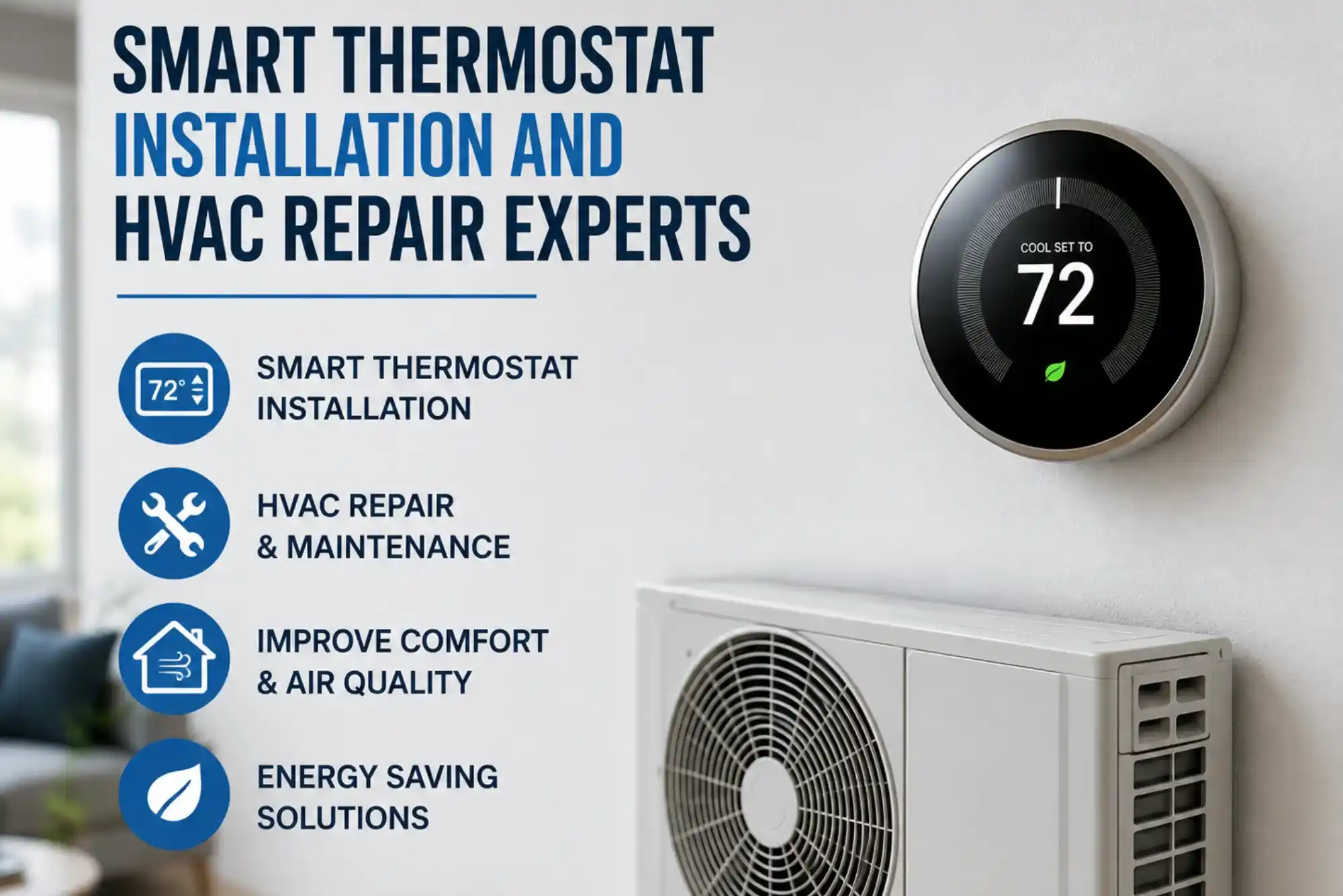
Modern heating and cooling systems are becoming more intelligent, connected, and responsive to the needs of occupants. A smart thermostat can help homeowners manage indoor temperatures more conveniently, while professional HVAC servicing ensures that the air conditioning system operates safely and efficiently. However, installing a thermostat is not simply a matter of mounting a device on the wall and connecting a few wires. Compatibility, wiring, system configuration, and proper testing all matter. This is why working with Smart Thermostat Installation And HVAC Repair Experts can make a significant difference.
For homeowners and property managers, the goal should not only be to install a modern thermostat but also to make sure the entire HVAC system is working correctly. Professional technicians can inspect the existing system, identify potential faults, configure the thermostat, and recommend suitable maintenance when required. Resources such as professional HVAC inspection and preventive maintenance can also help property owners understand why routine system checks are important.
Why Smart Thermostat Installation Requires Professional Attention
Smart thermostats are designed to provide greater control over indoor temperatures. Depending on the model and HVAC configuration, they may support scheduling, remote access, temperature sensing, and other automation features. Yet these functions depend on correct installation and compatibility with the heating or cooling equipment.
An incorrectly connected thermostat may cause inconsistent temperature control or prevent the HVAC system from responding as expected. Professional installation begins with identifying the existing thermostat wiring and determining how the HVAC equipment is controlled. The technician can then connect the new device correctly and verify its operation before leaving the property.
Checking HVAC Compatibility
Not every thermostat works with every HVAC configuration. Systems can differ in wiring requirements, control methods, power availability, and equipment type. A professional assessment helps prevent homeowners from purchasing a device that is unsuitable for their existing system.
Compatibility is particularly important when replacing an older thermostat in a property with a complex air conditioning setup. If the HVAC system already has performance issues, installing a new control device without addressing the underlying problem may not provide the expected results.

How Smart Thermostats Work With HVAC Systems
A thermostat acts as a control point between the occupants and the HVAC equipment. It monitors temperature conditions and sends commands to the system according to the selected settings. A smart thermostat can add more advanced control options, but the underlying HVAC equipment still needs to function properly.
For example, if an air conditioner has a refrigerant problem, restricted airflow, electrical fault, or damaged component, changing the thermostat settings will not resolve the mechanical issue. In such situations, professional diagnosis is essential. Property owners can review indoor and outdoor AC unit repair information to better understand how different parts of an air conditioning system can affect cooling performance.
Common Signs That Professional HVAC Service May Be Needed
- Indoor temperatures remain inconsistent despite thermostat adjustments.
- The air conditioner starts and stops unusually often.
- The HVAC system does not respond to thermostat commands.
- Cooling performance has noticeably declined.
- Unusual sounds or odors appear during operation.
- The system takes longer than normal to reach the desired temperature.
Smart Thermostat Installation and HVAC Repair Should Work Together
A smart thermostat can improve control, but it cannot compensate for an HVAC system that has not been properly maintained. Combining professional thermostat installation with appropriate HVAC inspection creates a more dependable approach to indoor comfort.
Technicians may check thermostat wiring, system response, airflow, electrical connections, filters, and other accessible components during a service visit. When an HVAC fault is identified, it should be addressed before relying on the thermostat for automated temperature management. For larger properties, complete HVAC system repair and maintenance can provide a broader approach to system reliability.
Choosing the Right Professional Service
When selecting an HVAC professional, look for experience with both modern thermostat technology and conventional air conditioning systems. A qualified technician should be able to explain compatibility, installation requirements, system limitations, and recommended maintenance without making unsupported promises.
Reliable service should focus on diagnosing the actual cause of a problem rather than simply replacing components. This approach helps homeowners make informed decisions and can reduce unnecessary repairs over time.
Benefits of Professional Smart Thermostat Installation
Professional installation can provide several practical benefits beyond simply having a new thermostat on the wall. A technician can verify the wiring, configure the available settings, test communication between the thermostat and HVAC equipment, and explain the controls to the property owner. This helps ensure that the system is ready for normal operation.
Proper setup is also important when a smart thermostat includes scheduling or remote-control functions. Incorrect settings can lead to unexpected operation, while a properly configured device can make temperature management easier for homeowners and property managers.
When HVAC Repair Should Come First
Sometimes the thermostat is blamed for a comfort problem even though the actual fault is somewhere else in the HVAC system. If the air conditioner is running but failing to cool properly, professional diagnosis should take priority over thermostat replacement.
Issues involving refrigerant levels, airflow restrictions, electrical components, compressors, fans, or other HVAC parts require appropriate inspection. For example, an air conditioner with cooling problems may need a technician to investigate the equipment itself rather than repeatedly changing thermostat settings. Professional AC cooling issue repair can help identify the underlying cause.
Smart Thermostat Installation vs. Traditional Thermostat Replacement
| Feature | Smart Thermostat Installation | Traditional Thermostat Replacement |
|---|---|---|
| Temperature control | Advanced programmable and connected controls | Basic manual or programmable controls |
| Remote access | Often available through compatible apps | Usually unavailable |
| Installation requirements | May require compatibility and wiring checks | Generally simpler, depending on system |
| System integration | Designed for compatible modern HVAC systems | Usually focused on basic HVAC control |
| Professional setup | Recommended for compatibility and configuration | May also be useful when wiring or system faults exist |
What Professional HVAC Technicians Check
A reliable HVAC service should begin with an assessment rather than an assumption. The technician can inspect the thermostat, wiring, HVAC response, cooling performance, and relevant system components. This process helps determine whether the problem is related to the thermostat, the HVAC equipment, or both.
For commercial properties, the inspection may need to be more comprehensive because HVAC systems can serve multiple rooms or larger occupied spaces. Preventive maintenance is especially useful for identifying developing problems before they interfere with normal building operations.
Expert Tip: Before purchasing a smart thermostat, have the existing HVAC system and thermostat wiring checked by a qualified technician. Confirming compatibility first can help prevent installation problems and unnecessary replacement costs.
How to Prepare for a Smart Thermostat Installation
Property owners can make the installation process easier by gathering basic information about their HVAC system and existing thermostat. If available, keep the equipment model information and installation documentation accessible. It is also helpful to explain any current cooling or temperature-control problems to the technician.
- Identify the existing thermostat and HVAC system type.
- Record any temperature-control problems you have noticed.
- Ask the technician to confirm thermostat compatibility.
- Allow the technician to inspect wiring and system operation.
- Test the thermostat and HVAC response after installation.
Why Regular HVAC Maintenance Still Matters
Installing smart controls does not eliminate the need for HVAC maintenance. Filters, electrical connections, airflow, outdoor equipment, and other components still require appropriate attention. Regular inspection can help maintain dependable operation and identify faults before they become more disruptive.
A smart thermostat can provide better control over an HVAC system, but the equipment itself remains the foundation of indoor comfort. Combining modern controls with professional maintenance creates a more complete approach to managing residential or commercial cooling systems.
Frequently Asked Questions
Can any HVAC system use a smart thermostat?
No. Compatibility depends on the HVAC equipment, wiring, power requirements, and thermostat design. A professional assessment can determine whether a particular model is suitable.
Should I install a smart thermostat if my AC is not cooling properly?
It is better to diagnose the cooling problem first. If the HVAC system has a mechanical, electrical, airflow, or refrigerant-related fault, a new thermostat will not necessarily solve it.
Why should a professional install a smart thermostat?
Professional installation helps verify compatibility, wiring, configuration, and HVAC response. It can also identify existing system problems that may otherwise be overlooked.
Does a smart thermostat replace HVAC maintenance?
No. A thermostat controls the system, but it does not replace inspection, cleaning, component checks, or necessary repairs.
When should I call HVAC repair experts?
Professional help is appropriate when the system does not respond to thermostat commands, cooling performance declines, temperatures become inconsistent, or unusual sounds and odors develop.
Conclusion
Smart Thermostat Installation And HVAC Repair Experts can help property owners combine modern temperature control with dependable HVAC performance. Professional installation ensures that the thermostat is compatible and correctly configured, while proper HVAC diagnosis and maintenance address the equipment itself.
The best results come from treating the thermostat and HVAC system as connected parts of one indoor comfort solution. Whether a property needs a smart thermostat installation, troubleshooting, preventive maintenance, or air conditioning repair, professional assessment can help ensure that the right solution is applied to the actual problem.
Related Reading: Smart Thermostat and AC Repair Services in Abu Dhabi
Related Reading: Daewoo Fridge Thermostat Issue