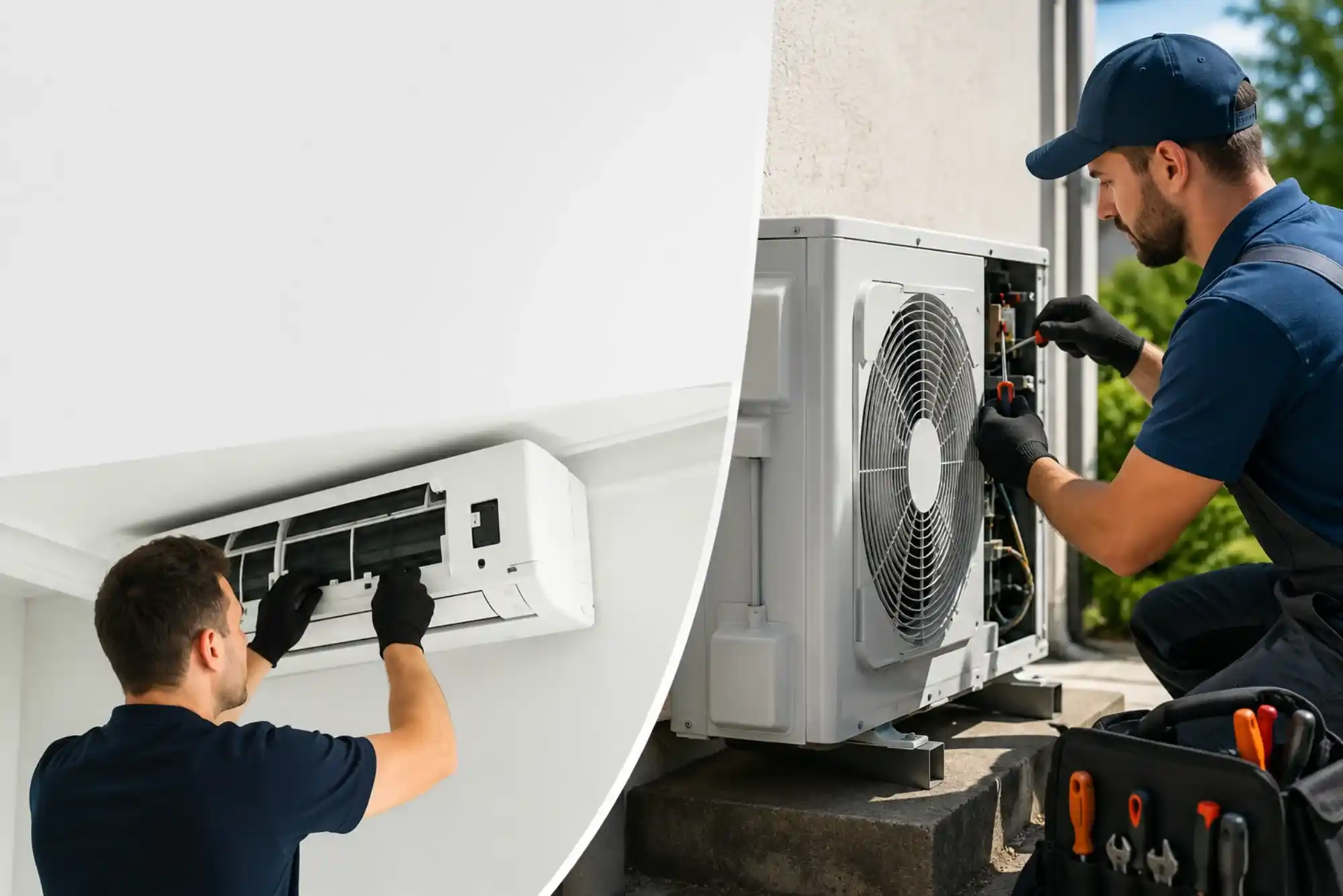
Reliable air conditioning depends on the smooth operation of both the indoor and outdoor AC units. Many homeowners focus only on cooling performance inside the property, but the outdoor condenser plays an equally important role in maintaining airflow, refrigerant circulation, and energy efficiency.
Indoor and outdoor AC unit repair involves diagnosing issues that affect cooling performance, airflow, temperature regulation, electrical components, drainage systems, and compressor operation. A properly maintained system not only improves indoor comfort but also helps reduce energy consumption and unexpected breakdowns.
In regions with high temperatures and continuous AC usage, regular inspections become essential for extending system lifespan and avoiding expensive repairs.
Understanding the Difference Between Indoor and Outdoor AC Units
Split air conditioning systems are designed with two connected sections that work together to cool indoor spaces efficiently.
| AC Component | Main Function | Common Problems |
|---|---|---|
| Indoor Unit | Distributes cool air inside the room | Water leakage, weak airflow, dirty filters, thermostat issues |
| Outdoor Unit | Releases heat outside through condenser coils | Compressor failure, fan damage, refrigerant leaks, overheating |
Because both units operate together, a problem in one section can directly affect the performance of the entire cooling system.
Common Indoor AC Unit Problems
Weak Airflow
Reduced airflow is one of the most common complaints in residential AC systems. Dirty air filters, blocked ducts, clogged evaporator coils, or blower motor problems often restrict proper circulation.

Homeowners sometimes mistake airflow problems for refrigerant issues, but a professional inspection is necessary to identify the actual cause.
Water Leakage from the Indoor Unit
Indoor AC units produce condensation during cooling cycles. When drain pipes become blocked or damaged, water starts leaking from the system.
Persistent water leakage can also damage ceilings and walls, eventually requiring additional maintenance such as ceiling damage repair services.
Thermostat Malfunctions
Incorrect thermostat readings often lead to inconsistent cooling, short cycling, or complete system shutdowns. In many cases, calibration problems or electrical faults affect temperature accuracy.
Property owners dealing with unstable temperature control can benefit from professional diagnosis related to AC thermostat issues.
Indoor Unit Noise
Grinding, buzzing, or rattling sounds from the indoor AC unit may indicate loose components, blower motor wear, or airflow obstructions. Unusual noise should never be ignored because early repairs can prevent larger mechanical failures.
Common Outdoor AC Unit Problems
Dirty Condenser Coils
The outdoor unit continuously collects dust, sand, and debris. Dirty condenser coils reduce heat transfer efficiency and force the system to work harder.
Regular cleaning improves cooling performance and lowers electricity consumption.
Fan Motor Failure
The outdoor fan removes heat from the condenser coils. A damaged fan motor can lead to overheating, poor cooling, and compressor strain.
Signs of fan motor issues include loud noise, slow fan rotation, or complete fan stoppage.
Refrigerant Leaks
Low refrigerant levels reduce cooling efficiency and may eventually damage the compressor. Refrigerant leaks often develop due to corroded coils, poor installation, or aging connections.
Symptoms such as ice buildup, reduced cooling, and higher electricity bills usually indicate refrigerant-related problems. Additional information about system imbalance can be found through common AC refrigerant overcharge symptoms.
Electrical Failures
Outdoor AC units rely on capacitors, contactors, relays, and wiring systems to operate correctly. Electrical damage can stop the entire unit from functioning.
Professional technicians frequently inspect breakers, voltage supply, and wiring during advanced repairs, especially in systems showing repeated shutdowns or power interruptions.
Signs Your AC System Needs Immediate Repair
Some cooling issues develop gradually, while others require urgent attention. Ignoring early warning signs can increase repair costs and shorten the system’s lifespan.
- Warm air blowing from vents
- Unusual smells during operation
- Constant breaker tripping
- Ice formation on coils
- Water leakage around the unit
- Higher-than-normal energy bills
- Frequent cycling on and off
- Loud noises from indoor or outdoor units
Electrical problems should be addressed immediately because they can affect safety and damage other connected components. Systems experiencing repeated shutdowns may require specialized AC electrical fault repair services.
How Professional AC Repair Technicians Diagnose Problems
Professional AC repair involves more than replacing visible parts. Skilled technicians follow a systematic inspection process to identify underlying causes and prevent recurring issues.
- Inspect thermostat settings and temperature response
- Check airflow and air filter condition
- Test refrigerant pressure levels
- Examine evaporator and condenser coils
- Inspect electrical wiring and capacitors
- Evaluate compressor and fan motor performance
- Test drainage systems for blockage
Advanced diagnostic tools help identify hidden problems that may not be visible during basic inspections.
Indoor and Outdoor AC Unit Maintenance Tips
Routine maintenance significantly reduces the risk of major AC failures. Many common repair issues develop because systems operate continuously without proper servicing.
Replace Air Filters Regularly
Dirty air filters reduce airflow and place additional strain on the system. Filters should typically be checked every one to three months depending on usage and environmental conditions.
Keep the Outdoor Unit Clean
Leaves, dust, and debris around the condenser unit restrict airflow. Maintaining a clean area around the outdoor unit helps improve heat dissipation.
Inspect Drainage Lines
Blocked condensate drain lines often lead to indoor water leakage and mold buildup. Preventive cleaning keeps drainage systems functioning properly.
Schedule Professional AC Servicing
Annual servicing allows technicians to inspect refrigerant levels, electrical systems, airflow balance, and mechanical components before serious problems develop.
Energy-saving maintenance solutions can also improve long-term efficiency and system performance. More information is available through energy-efficient AC repair solutions.
Repair vs Replacement: When Is It Time to Upgrade?
Not every AC issue requires full system replacement. However, older systems with repeated breakdowns may become expensive to maintain.
| Situation | Recommended Action |
|---|---|
| Minor electrical or airflow issue | Repair |
| Dirty coils or clogged drainage | Maintenance and cleaning |
| Repeated compressor failure | System evaluation |
| High energy bills with aging system | Consider replacement |
| Frequent refrigerant leaks | Major repair or replacement |
Modern AC systems often deliver better energy efficiency, quieter operation, and improved humidity control compared to older units.
Why Preventive AC Maintenance Saves Money
Preventive maintenance is usually more affordable than emergency repair work. Small issues such as loose electrical connections or clogged filters can escalate into compressor damage when ignored.
Routine servicing helps:
- Improve cooling efficiency
- Reduce electricity consumption
- Extend equipment lifespan
- Prevent unexpected breakdowns
- Maintain healthier indoor air quality
Industry recommendations for HVAC maintenance standards and energy efficiency practices can be reviewed here: [Insert relevant reference link here]
Choosing a Reliable AC Repair Service
Professional experience, proper diagnostics, and transparent service procedures are important when selecting an AC repair company.
Homeowners should look for:
- Experienced HVAC technicians
- Emergency repair availability
- Clear inspection procedures
- Proper electrical and refrigerant handling
- Preventive maintenance options
- Knowledge of split AC systems
Reliable technicians not only fix immediate cooling problems but also identify conditions that may cause future system failure.
Frequently Asked Questions
What causes an outdoor AC unit to stop working?
Outdoor AC units commonly stop working due to capacitor failure, dirty condenser coils, refrigerant leaks, compressor issues, or electrical faults.
Why is my indoor AC unit leaking water?
Water leakage usually happens because of blocked drain pipes, frozen evaporator coils, dirty filters, or damaged condensate systems.
How often should indoor and outdoor AC units be serviced?
Most residential AC systems should be professionally serviced at least once or twice per year, especially before peak summer seasons.
Can dirty outdoor coils affect cooling performance?
Yes. Dirty condenser coils reduce heat transfer efficiency, forcing the system to work harder and reducing overall cooling performance.
Is AC repair better than replacement?
Minor mechanical or electrical issues are usually worth repairing. However, older systems with repeated major failures may be more cost-effective to replace.
Conclusion
Indoor and outdoor AC unit repair plays a major role in maintaining efficient cooling, energy savings, and long-term system reliability. Problems such as weak airflow, refrigerant leaks, electrical faults, and drainage blockages can affect both comfort and operating costs when left unresolved.
Regular maintenance, timely diagnostics, and professional repair services help prevent major breakdowns while extending the lifespan of the entire cooling system. Whether the issue involves the indoor evaporator unit or the outdoor condenser, addressing problems early is the best way to maintain consistent performance throughout the year.
Related Reading: AC Outdoor Unit Not Running
