Causes of Washing Machine Leakage: Common Problems, Prevention, and Effective Solutions
A washing machine is one of the hardest-working appliances in any home, making laundry faster and more convenient. However, discovering water pooling around the machine can quickly turn a routine wash into a stressful situation. Understanding the Causes of Washing Machine Leakage helps homeowners prevent costly repairs, reduce water damage, and extend the lifespan of their appliances.
Water leaks can originate from several components, including damaged hoses, worn-out seals, blocked drains, or internal mechanical failures. While some issues can be identified through basic inspection, others require professional diagnosis to prevent further complications. If a leak becomes severe or unexpected, seeking assistance from an emergency washing machine repair service can help minimize damage and restore your appliance quickly.
This guide explains the most common reasons washing machines leak, warning signs to watch for, preventive maintenance practices, and when professional repair becomes the safest option.
Why Understanding the Causes of Washing Machine Leakage Matters
Even a small leak should never be ignored. Continuous water exposure can damage flooring, cabinets, walls, and electrical components. In addition, moisture encourages mould growth, creating unhealthy indoor conditions.
Early identification of leaks offers several benefits:
- Prevents expensive structural damage.
- Reduces unnecessary water waste.
- Extends appliance lifespan.
- Improves washing machine efficiency.
- Helps avoid unexpected breakdowns.
Most Common Causes of Washing Machine Leakage
1. Damaged Water Supply Hoses
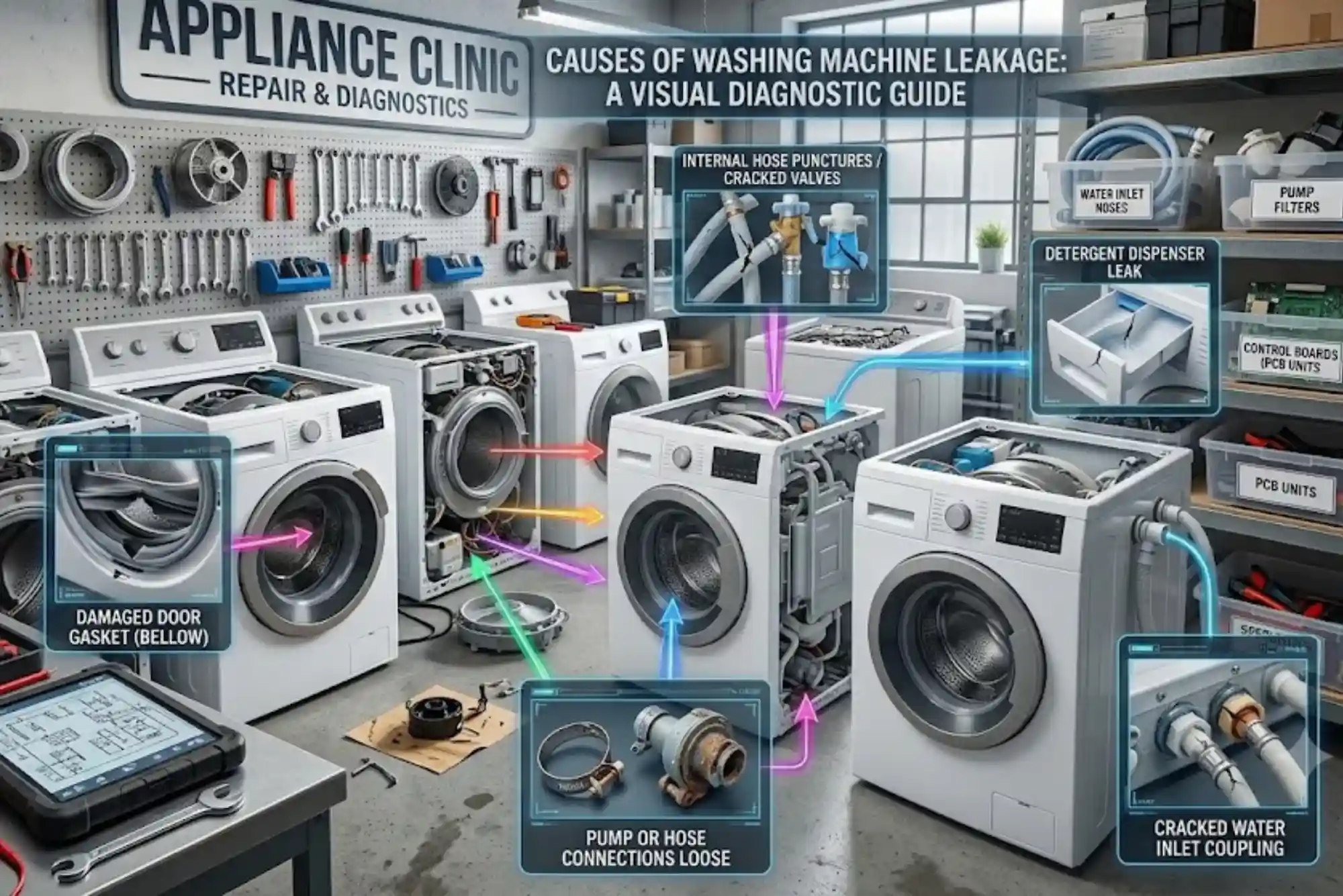
The inlet hoses continuously carry water into the washing machine under pressure. Over time, rubber hoses may crack, while braided hoses can loosen around the fittings. Small cracks often remain unnoticed until water begins leaking during wash cycles.

Inspect both hot and cold water hoses regularly. Look for:
- Visible cracks
- Bulging sections
- Loose threaded connections
- Signs of corrosion around fittings
Replacing worn hoses every few years significantly reduces leakage risks.
2. Loose Hose Connections
Sometimes the hose itself isn’t damaged—the connection simply becomes loose after months of vibration. Water can slowly escape from improperly tightened fittings behind the machine.
A careful inspection of every connection often reveals minor leaks before they become major problems.
3. Worn Door Seal (Front Load Machines)
Front-load washing machines use a flexible rubber gasket to create a watertight seal around the door. Coins, buttons, sharp objects, detergent buildup, or mould may damage the gasket, allowing water to escape during operation.
Common symptoms include:
- Water leaking from the front door
- Torn rubber edges
- Mould accumulation
- Visible punctures
Cleaning the gasket regularly helps preserve its flexibility and sealing performance.
4. Overloaded Washing Machine
Many homeowners overload the drum to reduce the number of laundry cycles. Unfortunately, excessive weight creates uneven movement, increasing pressure on internal seals and suspension components.
An overloaded machine may:
- Leak during spinning
- Shake excessively
- Wear components faster
- Reduce washing efficiency
Following the manufacturer’s recommended load capacity protects both the appliance and internal water seals.
Drain System Problems That Cause Leaks
Blocked Drain Hose
Lint, fabric fibres, detergent residue, and debris can gradually clog the drain hose. As water struggles to exit the machine, pressure builds inside the drainage system and may force water out through weak joints.
Routine inspection and cleaning of the drain hose improve water flow and reduce overflow risks.
Faulty Drain Pump
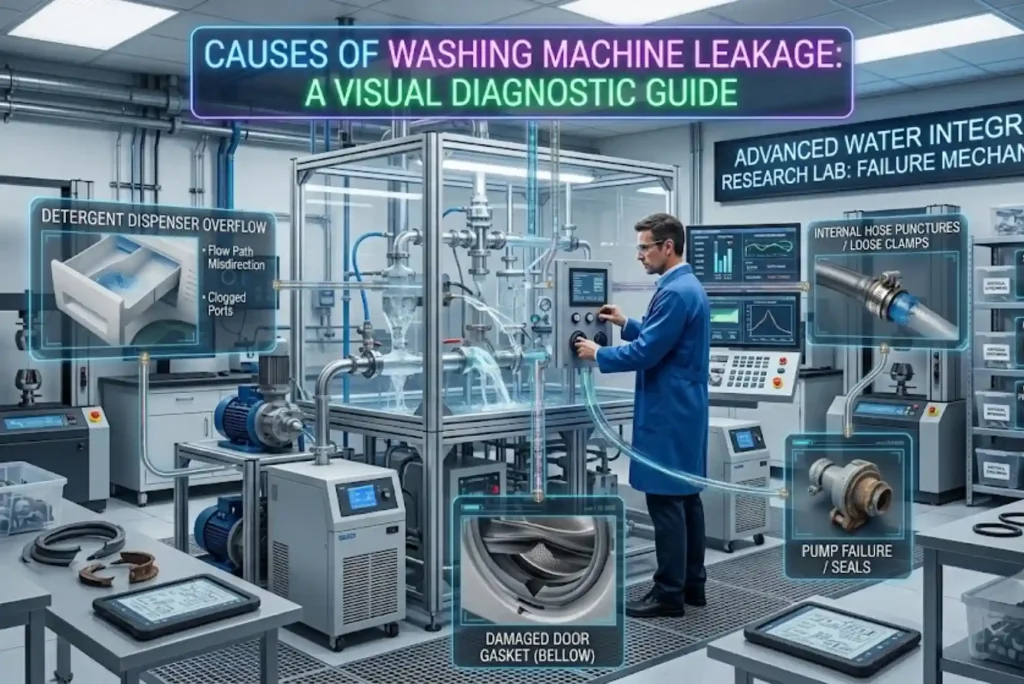
The drain pump removes wastewater after each cycle. A cracked housing, damaged impeller, or worn pump seal can result in continuous dripping beneath the machine.
Typical warning signs include:
- Water underneath the appliance
- Unusual grinding sounds
- Slow drainage
- Water remaining inside the drum
Professional technicians offering washing machine repair services can accurately diagnose whether the pump requires repair or replacement.
Internal Components That May Leak
Detergent Drawer Overflow
Using excessive detergent creates heavy foam that restricts normal water flow through the dispenser. Eventually, water spills over the drawer instead of entering the drum.
Cleaning detergent compartments regularly and using the correct detergent quantity helps prevent overflow.
Cracked Tub or Internal Components
Although uncommon, internal tubs may develop cracks due to ageing, heavy impact, or long-term wear. Water leakage from the centre or bottom of the appliance often indicates a more serious internal issue that requires professional inspection.
For complex mechanical problems, experienced home washing machine repair experts can identify damaged components using specialised diagnostic equipment before recommending the most practical repair solution.
Quick Comparison of Common Leak Sources
| Leak Source | Common Symptoms | Recommended Solution |
|---|---|---|
| Water Supply Hose | Leaks behind the machine | Replace damaged or worn hose |
| Door Gasket | Water leaking from front door | Clean or replace rubber seal |
| Drain Hose | Overflow during draining | Remove blockage or replace hose |
| Drain Pump | Water underneath appliance | Professional inspection and repair |
How to Prevent Washing Machine Leakage Problems
Regular maintenance is one of the most effective ways to reduce the chances of water leaks. A washing machine that receives proper care usually performs more efficiently and experiences fewer unexpected failures.
Homeowners can follow these simple maintenance practices:
- Check water hoses regularly for cracks or loose connections.
- Clean the detergent drawer to prevent residue buildup.
- Avoid placing excessive clothes inside the drum.
- Keep the area around the washing machine dry and clean.
- Inspect the door gasket for damage or mould growth.
- Remove small objects from clothing before washing.
Preventive maintenance not only reduces leakage risks but also helps maintain better washing performance over time.
Signs Your Washing Machine Needs Professional Attention
Some leaks are easy to fix, but repeated water leakage often indicates an underlying mechanical problem. Continuing to use a leaking appliance can increase repair costs and may damage other household areas.
Professional repair may be necessary when you notice:
- Water leaking from underneath the machine repeatedly.
- The washing machine stops draining properly.
- Strange noises appear during wash cycles.
- The appliance moves excessively while spinning.
- Leaks continue after tightening hoses and cleaning filters.
A qualified technician can inspect internal components, identify the exact cause, and provide a reliable repair solution instead of temporary fixes.
DIY Inspection vs Professional Washing Machine Repair
| Inspection Type | Suitable For | Limitations |
|---|---|---|
| DIY Checking | Loose hoses, detergent buildup, visible damage | Cannot diagnose hidden internal failures |
| Professional Repair | Pumps, seals, motors, internal leaks | Requires expert service |
Expert Tip: If your washing machine starts leaking, avoid running additional cycles until the problem is identified. Continuing operation can force more water into damaged areas and increase the possibility of expensive repairs.
Why Professional Diagnosis Is Important
Modern washing machines contain advanced electronic controls and multiple internal systems that work together. A leak may appear in one location while the actual problem exists somewhere else inside the appliance.
For example, water appearing beneath the machine does not always mean the bottom panel is damaged. The source could be a leaking pump, damaged hose connection, or faulty internal seal. Professional technicians use inspection methods to locate the real issue and prevent repeated breakdowns.
Choosing a trusted repair provider such as washing machine repair solutions can help homeowners receive accurate troubleshooting and long-lasting repair results.
Frequently Asked Questions About Washing Machine Leakage
What are the most common causes of washing machine leakage?
The most common causes include damaged water hoses, loose connections, worn door seals, clogged drain systems, faulty pumps, and overloaded washing machines. Identifying the exact source helps prevent further damage.
Can I fix a leaking washing machine myself?
Minor problems such as loose hose connections or blocked detergent drawers can often be handled by homeowners. However, internal leaks involving pumps, seals, or electrical components should be inspected by a professional.
Why does my washing machine leak only during the spin cycle?
Leaks during spinning are often related to excessive vibration, overloaded drums, damaged seals, or drainage problems. The high-speed movement during spinning can expose weaknesses that are not visible during normal operation.
How can I stop my washing machine from leaking water?
Start by checking hoses, cleaning the detergent drawer, inspecting the door seal, and ensuring the appliance is not overloaded. If leakage continues, professional diagnosis is recommended.
Is a leaking washing machine dangerous?
Yes, a leaking washing machine can create safety risks if water reaches electrical connections. It can also damage flooring, walls, and nearby furniture if ignored for a long time.
Conclusion
Understanding the Causes of Washing Machine Leakage allows homeowners to identify problems early and take the right action before serious damage occurs. From damaged hoses and worn seals to drainage issues and internal failures, every leak has a specific cause that requires proper attention.
Regular maintenance, careful usage, and timely professional inspections can significantly improve washing machine reliability. When leaks become frequent or difficult to locate, expert repair services provide the safest and most effective solution.
Related Reading: Washing Machine Maintenance Tips — full guide
Related Reading: Washing Machine Mid-Cycle Stop Fix — full guide
